
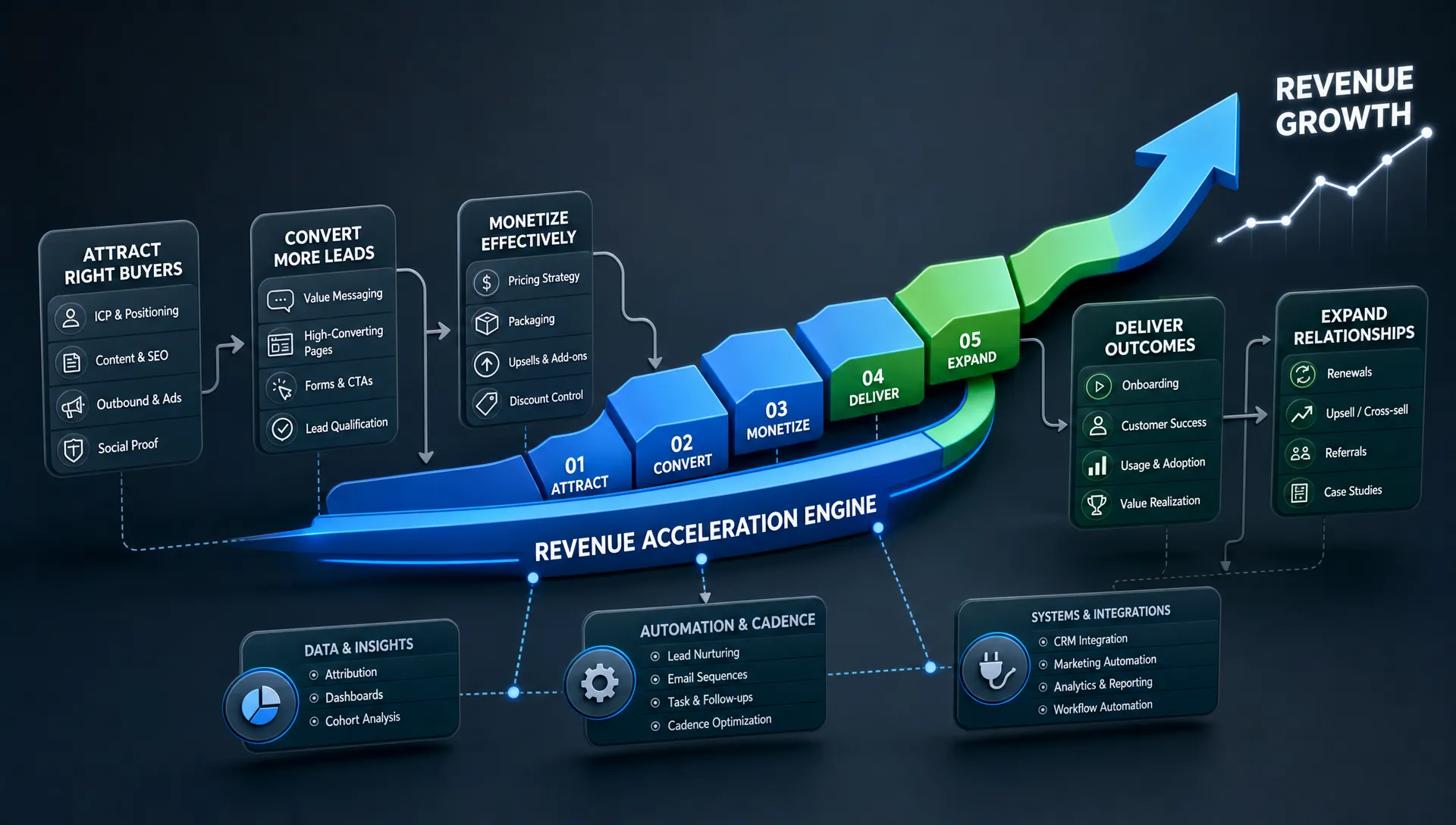
Why Consulting to PE Needs an Operator Mindset
Private equity does not have much tolerance for beautiful strategy that cannot survive first contact with the portfolio company. The board can approve the thesis, the model can support the upside and the market can look attractive, but value is only created when people inside the business change how they sell, price, report, hire, automate and make decisions.
That is why consulting to PE needs an operator mindset. Sponsors are not simply buying outside perspective. They are buying speed, discipline and confidence that a commercial plan can be converted into measurable execution before the investment window narrows.
An operator-minded consultant does not ask, “What should the company do?” and stop there. They ask, “Who will do it, by when, with what resources, under which constraints and how will we know if it is working?”
That difference matters.
What an operator mindset means in consulting to PE
An operator mindset is not just a resume label. Plenty of consultants have held operating roles, and plenty of former operators struggle to advise across multiple companies. In the PE context, the operator mindset is a way of working.
It means treating every recommendation as an execution commitment. It means understanding that the management team is already running the business, that the sponsor has a hold-period clock in mind and that the value creation plan must translate into operating cadence quickly.
The consultant with an operator mindset thinks in constraints, not just opportunities. They pressure-test whether the sales team can actually run the new motion, whether the CRM data can support board reporting, whether the customer base will accept pricing changes and whether leadership has the bandwidth to absorb another initiative.
| Traditional advisory posture | Operator mindset posture |
|---|---|
| Builds recommendations | Installs decisions, owners and cadence |
| Optimizes the deck | Optimizes the operating system |
| Focuses on market potential | Focuses on executable revenue capture |
| Treats management as an audience | Works with management as the execution engine |
| Measures success by deliverables | Measures success by behavior change and commercial results |
This is especially relevant for lower middle market and mid-market portfolio companies, where systems are often immature, data may be incomplete and management teams are stretched. A strategy that looks sensible in a board pack can fail because nobody had the time, tools or process discipline to make it real.
Why PE consulting fails when it stays too theoretical
The PE environment is not a normal corporate strategy setting. The commercial plan is tied to entry valuation, leverage, board scrutiny, future fundraising, exit narrative and management incentives. A consultant who misses that context can create work that is intellectually sound but practically weak.
Three conditions make PE different.
First, time is compressed. A corporate transformation can sometimes unfold across several years. A PE-backed company often needs visible momentum in the first few quarters. Even when the hold period is longer, sponsors need evidence that the thesis is moving in the right direction.
Second, the data is rarely perfect. Many portfolio companies have patchy CRM hygiene, inconsistent pipeline definitions, customer segmentation based on history rather than profitability and limited visibility into sales productivity. Waiting for perfect data delays action. Ignoring the data creates false confidence. The operator-minded consultant knows how to make decisions with imperfect information while improving the system as they go.
Third, the management team is not a passive recipient. They have their own history, incentives, scars and capacity limits. If they do not believe the plan can work, or if the plan overloads them, execution will slow down. A strong PE consultant must be commercially sharp enough for the sponsor and practical enough for the CEO, CRO and functional leaders.
If the question is whether the business needs outside support at all, the better diagnostic is not “Do we need a consultant?” It is “Is the commercial system producing the evidence the investment thesis requires?” That distinction is covered in more detail in this guide on when to bring in a PE consultant for commercial change.
The operator starts with commercial truth
Operator-led PE consulting starts by finding commercial truth. Not the version of the business that appears in the CIM, the board deck or the annual budget. The real version.
Commercial truth sits in the gap between what the company believes and what customers, sales data and frontline execution are proving. It shows up in win rates, sales cycle length, customer concentration, pricing leakage, churn, rep productivity, pipeline quality and the quality of management discussion around those metrics.
A consultant with an operator mindset will usually want to understand questions such as:
- Which customer segments create the best gross margin, retention and expansion potential?
- Which parts of the pipeline are real, and which are optimistic placeholders?
- Where do deals stall, and is the issue messaging, qualification, pricing, proof, urgency or sales discipline?
- Are top performers succeeding because of the system, or despite it?
- Does the revenue forecast reflect actual buyer behavior, or internal pressure to hit the plan?
- Which growth levers can be acted on now without breaking the business?
The goal is not to embarrass management or second-guess the deal team. The goal is to remove ambiguity. Once the commercial truth is clear, the sponsor can decide where to push, where to protect and where to sequence change more carefully.
This is where many growth plans go wrong. They assume the company is ready to scale before the revenue engine is stable. If the ICP is vague, the sales process is inconsistent and leadership cannot trust the forecast, more activity simply creates more noise. Sponsors should often fix the operating basics before adding new growth pressure.
Turning the thesis into an operating rhythm
A deal thesis usually describes what must become true. An operating rhythm defines how the company will make it true.
This is one of the clearest differences between advisory consulting and operator-led consulting. The advisory version may recommend a new go-to-market strategy. The operator version translates that strategy into meeting cadence, dashboards, pipeline inspection, account ownership, customer feedback loops, hiring priorities and escalation rules.
The rhythm matters because PE-backed change is rarely blocked by a lack of ideas. It is blocked by weak follow-through. Management agrees to priorities, but the weekly operating meeting drifts into anecdote. The sales leader commits to pipeline discipline, but definitions remain inconsistent. Marketing produces content, but sales does not use it. Pricing changes are approved, but exceptions keep slipping through.
An operator-minded consultant helps close those gaps by installing habits that force clarity. The work becomes less about “strategy alignment” and more about repeated commercial decisions.
| Operating rhythm element | Why it matters in a PE-backed company |
|---|---|
| Weekly revenue cadence | Keeps pipeline, forecast and blockers visible |
| Clear initiative owners | Prevents sponsor priorities from becoming management noise |
| Stage-based pipeline definitions | Improves forecast quality and board confidence |
| Customer segment reporting | Shows where growth is valuable, not just where revenue appears |
| Pricing and margin review | Protects EBITDA quality while pursuing top-line growth |
| Board-ready KPI discipline | Connects day-to-day action with the value creation plan |
A useful companion to this approach is the Operating Partner Playbook for Revenue Growth, which goes deeper into converting board-level priorities into a commercial operating system.
Where the operator mindset changes the engagement
The operator mindset changes PE consulting across the full investment lifecycle, from diligence to exit readiness. It does not mean the consultant takes over management’s job. It means the consultant works close enough to execution that recommendations are grounded in the company’s actual ability to move.
Commercial due diligence that looks beyond market size
Commercial due diligence often focuses on market attractiveness, competitive positioning and customer validation. Those still matter, but an operator lens adds another question: what will it take to capture the upside after close?
That means assessing the maturity of the revenue engine, not just the attractiveness of the opportunity. A company may operate in a growing market and still lack the sales process, leadership capacity or pricing discipline to capture that growth. The diligence output should help the sponsor understand the size of the prize and the operating lift required.
Day-one and first-100-day execution
The first months after acquisition often set the tone. If the sponsor arrives with too many initiatives, management can become defensive or distracted. If the sponsor moves too slowly, early momentum is lost.
An operator-minded consultant helps prioritize. They separate urgent commercial constraints from second-order improvements. They identify which changes need sponsor support, which belong with management and which should wait until the business has stabilized.
The first 100 days should not become a theater of activity. It should create a small number of visible wins, better operating visibility and alignment around the few constraints that matter most.
Sales and go-to-market optimization
Sales optimization is where operator discipline becomes obvious. It is easy to recommend better qualification, clearer messaging or improved account planning. It is harder to implement those changes in a way that managers reinforce every week.
The operator-minded consultant looks at the mechanics: territory design, pipeline stages, handoffs, sales management cadence, compensation signals, proof assets, proposal quality and how objections are handled. They also watch for the hidden problem behind many sales issues, which is not rep effort but poor commercial design.
A stronger sales system should make average performers better, not only celebrate top performers. If the business depends on a few heroic sellers, the exit story becomes fragile.

Market expansion with operating discipline
International expansion, new verticals and channel growth can create meaningful value, but only when the core motion is clear. A sponsor may see expansion as a growth lever, yet the company may still be unclear about its best-fit customer or most repeatable sales motion.
The operator mindset asks whether expansion is an extension of a proven system or a distraction from unresolved issues. If the company has a narrow, validated offer and a repeatable acquisition model, expansion can be sequenced intelligently. If not, it can consume management bandwidth and weaken the base business.
AI and automation that do not automate chaos
AI has become central to many portfolio-level value creation conversations. Used well, it can improve research, personalization, reporting, content production, workflow automation and management visibility. Used poorly, it accelerates broken processes.
The operator mindset is essential here. Before automating, the consultant should ask whether the process is worth automating, whether the data is clean enough, whether users will adopt the workflow and whether the output will improve decisions. AI systems should support the commercial operating model, not sit beside it as a disconnected experiment.
Talent, capability and upskilling
PE-backed growth frequently exposes capability gaps. The business may need stronger sales management, better RevOps discipline, more sophisticated pricing, improved customer success or leaders who can manage through metrics rather than instinct alone.
A consultant with an operator mindset does not treat talent as a vague HR topic. They ask which capabilities are required for the value creation plan and how quickly the company can build or buy them. In some cases, that means hiring. In others, it means focused coaching, enablement and training. For leadership teams building capability at scale, structured learning options such as practical upskilling paths can complement internal operating support, especially when teams need business, technology and digital skills delivered in a flexible format.
What PE firms should expect from an operator-led consultant
A sponsor should expect more than a diagnostic report. The right consultant should be able to move between the boardroom and the weekly revenue meeting without losing credibility in either place.
That requires commercial judgment, pattern recognition and the ability to work through people. It also requires restraint. Operator-minded consultants do not try to fix everything at once. They understand sequencing, because they know that too many simultaneous changes can create resistance and dilute accountability.
A strong engagement should produce practical outputs such as:
- A clear view of the commercial constraints affecting the investment thesis
- A prioritized set of revenue initiatives tied to value creation impact
- A management cadence that improves decision quality
- KPI definitions that the board and operators can both trust
- Sales, GTM or automation changes that are realistic for the team to adopt
- An exit-relevant narrative supported by better evidence over time
The best consultants are also comfortable telling the sponsor when the growth plan is running ahead of the operating base. That honesty matters. PE firms often miss growth targets not because the thesis was irrational, but because execution gaps were underestimated after close. This is a recurring theme in why PE firms miss growth targets after acquisition.
Red flags when hiring a consultant for PE work
Not every consultant who serves private equity works with an operator mindset. Some bring useful analysis but struggle to influence execution. Others know how to run a company but cannot translate that experience across sectors, sponsors and management team dynamics.
A few warning signs deserve attention:
- The consultant talks mostly about frameworks and little about operating cadence
- They cannot explain how recommendations will be owned inside the company
- They treat management resistance as a people problem rather than a change design problem
- They overpromise growth without addressing data quality, sales capacity or pricing discipline
- They focus on new initiatives before understanding the current revenue engine
- They produce board materials that do not change frontline behavior
The selection question should be direct: can this person or firm help us make better commercial decisions faster, and can they help management execute those decisions without creating unnecessary drag?
The portfolio-level advantage
The operator mindset becomes even more valuable at portfolio level. A single company engagement can improve one asset. A portfolio operating model can create repeatable commercial infrastructure across many companies.
This does not mean forcing every portfolio company into the same playbook. Different sectors, ticket sizes, sales cycles and leadership teams require different motions. But sponsors can standardize the questions, metrics and cadence used to assess commercial maturity.
At portfolio level, operator-led consulting can help PE firms identify which companies need diagnostic work, which need hands-on revenue support, which need management enablement and which are ready for expansion or AI-enabled efficiency. The sponsor gains a more consistent way to allocate operating attention.
That consistency supports exit readiness too. Buyers do not only want to see growth. They want confidence that growth is repeatable, explainable and not dependent on a few individuals. An operator mindset helps build the evidence behind that story.
Frequently Asked Questions
What does consulting to PE mean? Consulting to PE means advising private equity firms, their operating partners or portfolio companies on issues that affect investment performance. In a commercial context, this often includes revenue acceleration, sales optimization, market expansion, diligence support, AI-enabled systems and exit readiness.
Why is an operator mindset important for PE consultants? An operator mindset is important because PE value creation depends on execution, not just analysis. Consultants need to understand how recommendations will be implemented inside the company, who will own them, what cadence will sustain them and how progress will be measured.
Is an operator-minded consultant the same as a fractional CRO? Not always. A fractional CRO may take direct responsibility for revenue leadership or commercial execution. An operator-minded consultant may advise, diagnose, install systems or support management without formally owning the CRO role. The common thread is practical execution discipline.
When should a PE firm bring in an operator-led consultant? A PE firm should consider outside support when growth targets depend on commercial change that the current team cannot design or execute alone. Common triggers include weak forecast visibility, stalled sales productivity, unclear ICP, expansion pressure, poor pricing discipline or a gap between the deal thesis and management cadence.
Can operator-led consulting help before acquisition? Yes. During diligence, an operator lens can reveal whether the target has the commercial infrastructure to capture the thesis. It can also estimate the operating lift required after close, which helps sponsors plan the first 100 days more realistically.
Bring operator discipline into the value creation plan
PE firms do not need more advice that dies in a slide deck. They need commercial support that can diagnose the constraint, align the sponsor and management team, then install the operating rhythm required to move revenue, margin and exit readiness.
Phil Pelucha Consulting works with PE firms, VC firms, family offices and portfolio companies on revenue acceleration, commercial diagnostics, fractional CRO support, market expansion and AI-powered portfolio systems. If your investment thesis depends on better commercial execution, the right conversation is not just what should change. It is how quickly the business can make that change real.
Start with the operating truth, then build the system that makes growth repeatable.